By: Dick van Mersbergen
Shortly after my encounter with Confucius, I met the fourth philosopher at the Be Informed headquarters: Bertrand Russell (1872-1970). His quote: "Too little liberty brings stagnation and too much brings chaos.”
Liberty and freedom
In Dutch, we use the same word for liberty and freedom: vrijheid. Yet there is a subtle difference. Freedom (free will) is the ability to make choices without constraints. For example, a domino’s movement is completely determined by laws of physics, it does not have any freedom. Liberty is to be able to govern yourselves, to behave according to your own free will, and take responsibility for your actions. So I wondered: do we want liberty or do we want freedom?
 Children vs. parents
Children want a lot of freedom, as any parent will confirm. But children not granted many liberties: children are not allowed to travel on their own, to drink or smoke, to decide what to eat, to go to bed late, etc. So many rules, their live must be hell on earth..! (And it does not get better at school, where they give out homework on top of all the rules.) Yet most children stick to their parents. I remember running away as a child, only to find myself stuck 40 meters from home: I was not allowed to cross a busy road.
So how come children are happy with little liberty? Easy: they are getting a lot of freedom! Parents go out of their ways to lift any constraint their precious crop might come across. Children like this. A lot. And they sure don’t want the responsibility that comes with every liberty. Besides, they receive benefits like love, security, free food and clothes, Xmas presents, etc. Why should they rule themselves?
 People vs. government
When the Occupy movement took over a square in Amsterdam, anything went in the beginning. A colourful bunch camped in the open, living their dream and changing the world. But suddenly, after a few days, a guy was in control of the food distribution. Then an other guy was arranging security and a third guy was speaking to the press, etc. A mini-society developed and ironically, that society was very similar to the one they were protesting against.
The occupyers still had a lot of freedom, but were willing to give up liberties and hand over responsibility to others. They made rules. This applies to any organisation, being a community, a state or a nation. Whatever system a country is run by, people agree on rules for the greater good. The thing people most want is freedom.
 Knowledge workers vs business processes
In business, most business processes are charactarized by little liberty: they are fully predefined. Variations either become a new process or are added to the business process, creating a more complicated version. As a result, business operations become stagnant. The opposite, instructing people to simply rule themselves and handle situations as they see fit, is also counterproductive. It would bring chaos, inconsistency and a high business risk.
Having business rules is not a problem, it is the way we arrange work. Like we saw earlier, knowledge workers are perfectly willing to agree on rules and have less self-government. What they demand is freedom. They not just want to carry out instructions, any machine can do that! They want to act with as little constraints as possible.
 Free the people!
Be Informed helps to arrange that. With our declarative approach, there is no predefined process, just the possible relationships between various activities. These are the actual rules. Every transaction can have a unique path, chosen by the customer or worker, within the guidelines. Then, there is neither chaos nor stagnation.
And best of all: both customers and workers have the maximum of freedom. Which makes them very happy.


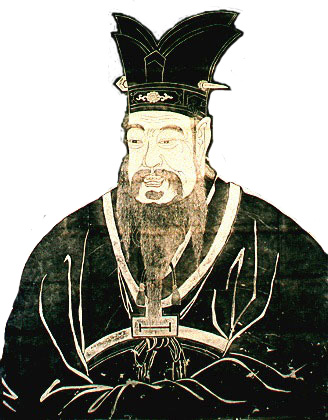 The third philosopher I came across at the Be Informed headquarters is the famous Chinese thinker and social philosopher Confucius. His quote reads:
 By: Frank Buytendijk, chief marketing officer
 By: Frank Buytendijk, chief marketing officer

 All meeting rooms at the Be Informed headquarters are named after famous philosophers. Large posters explain how they relate to our product and company.
The second philosopher I came across is Ludwig Wittgenstein. His quote:“Logic takes case of itself; all we have to do is to look and see how it does it.”
All meeting rooms at the Be Informed headquarters are named after famous philosophers. Large posters explain how they relate to our product and company.
The second philosopher I came across is Ludwig Wittgenstein. His quote:“Logic takes case of itself; all we have to do is to look and see how it does it.” Like every sports-minded Dutchman, the combination of the words
 The
Master immediately said: “Stop! You do it all wrong.” The other players
replied: “But we play this game for years and it works fine. What’s the
problem?” Cruijff explained that when the 4 players are in the corners,
they limit their space. There are just two good passes possible (the
orange arrows), as the pass through the middle is likely to be
intercepted. There is hardly room for improvement, for example when X1
and X3 move will not change a thing.
The
Master immediately said: “Stop! You do it all wrong.” The other players
replied: “But we play this game for years and it works fine. What’s the
problem?” Cruijff explained that when the 4 players are in the corners,
they limit their space. There are just two good passes possible (the
orange arrows), as the pass through the middle is likely to be
intercepted. There is hardly room for improvement, for example when X1
and X3 move will not change a thing. Even the pass through the middle will be OK
because the defenders will be forced to leave this space more open.
Even the pass through the middle will be OK
because the defenders will be forced to leave this space more open. And there is a link with our company as well. At Be Informed, we looked at
the way business processes were automated and we said: “Wait, is this really the best way to do things?”. Instead of playing the same game over and over again, we introduced
a new goal-oriented approach and created a completely new -and winning- game in the world of Business Process Management.
And there is a link with our company as well. At Be Informed, we looked at
the way business processes were automated and we said: “Wait, is this really the best way to do things?”. Instead of playing the same game over and over again, we introduced
a new goal-oriented approach and created a completely new -and winning- game in the world of Business Process Management. In one of the meeting rooms at Be Informed I came across a famous quote by Sun Tzu:
 The first chess machine was constructed by Wolfgang von Kempelen in 1770 to impress Hapsburg Empress Maria Theresa. It was called
  Turning point was the 1996 match between IBM's Deep Blue and Gary Kasparov (one of the strongest chess players of all time), where the latter lost his
 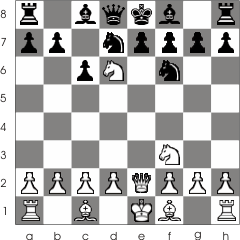 So where chess programmers found that it was useless imitating a chess player, we at Be Informed don’t want our
  In a
In a